

Understanding migraine & surgical relief
At Oxford Migraine Practice we want to help make a difference to the lives of those living with migraine through a method of surgical treatment that has been imported from the USA and is not yet widely practised in the UK.
Migraine surgery
Migraine surgery &
how it can help
Peripheral nerve decompression surgery for migraines is low-risk, minimally invasive, and its efficacy has been proven in hundreds of scientific studies over nearly 30 years. With careful patient selection it can provide long-lasting reduction in migraines. Some patients even report never having a migraine again.
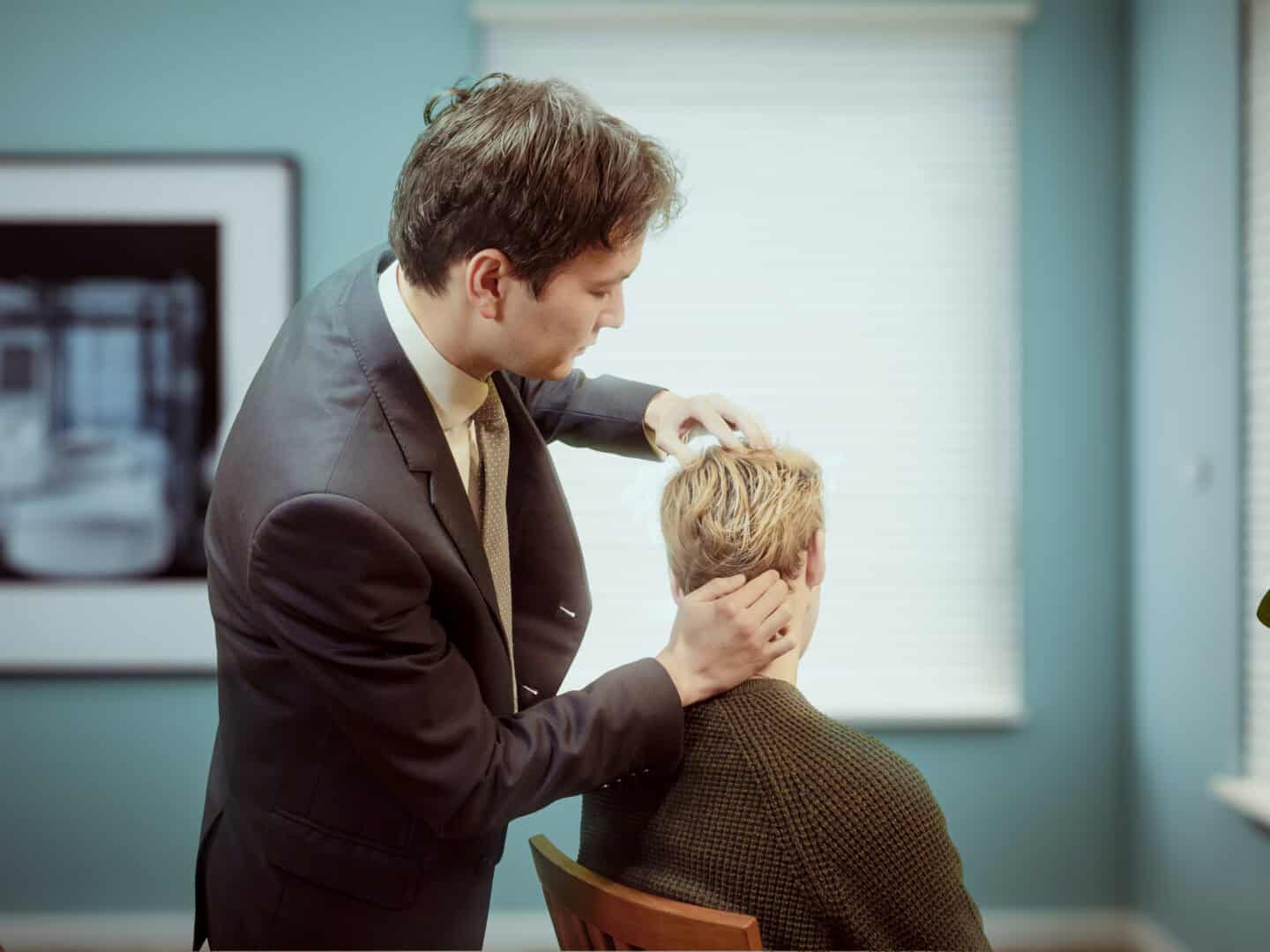
We at the Oxford Migraine Practice are committed to offering people suffering from migraines life-changing treatment that can offer a genuine relief from their migraines. We have highly skilled surgeons with expertise in migraine surgery and the science of nerve compression. We offer a recognised treatment for migraines with care, understanding and empathy. We spend time with our patients to understand their condition and combine a thorough clinical examination with targeted injections of Botox to assess whether they are likely to be suitable for surgery. We only offer surgery to those patients who we think will benefit. No two patients are the same, and our bespoke surgical plans are tailored to each individual patient.
STATISTICS
A 2022 study found that 40% of patients who had migraine surgery experienced an elimination of their migraines. Approx 85% of patients experienced an overall improvement.
What are Migraines?
Migraine is a very common condition that is estimated to affect every 1 in 7 people worldwide at some stage in their lives. The pain associated with a migraine usually starts on one side of the head but may spread to both sides, and can have a vast array of associated symptoms.
These vary greatly and can include severe sensitivity to light, sound and smells, nausea, vomiting, and brain fog. Temporary visual disturbances, aura, can also be present and often occur before the migraine pain begins. Migraine attacks can last from hours to days.

Traditional Migraine Treatments
There are hundreds of medications available for migraine and they are generally split into two categories: preventative medications to reduce the frequency of attacks, and abortive medications for when an attack starts. Migraine is a spectrum. Some people will experience an attack once or twice a month, whereas for others, their migraines might be more frequent but are well-controlled with medications.
Unfortunately for a large number of those who have migraines, it can take over their life. Some find that they are using multiple medications and find no relief from migraine pain and symptoms, leading to a profound impact on their quality of their life. At Oxford Migraine Practice we want to help make a difference to the lives of those living with migraine through a method of surgical treatment that has been imported from the USA and is not yet widely practised in the UK.

Migraine Surgery
Migraine surgery has evolved considerably over the past 25 years, and hundreds of studies including thousands of patients have been published in the medical literature, demonstrating the efficacy of surgical nerve decompression in appropriately selected migraine patients.
Systematic reviews are a type of study that collate the evidence from a large number of individual studies. Several of these have been undertaken for migraine surgery, the most comprehensive of which was published in the Annals of Surgery in 2022. This paper analysed a total of 68 studies, and concluded that there was a statistically significant overall reduction in migraine intensity, frequency, and duration in patients who had undergone surgery. Of the 35 studies that reported on migraine improvement, between 68.3%-100% of participants reported an improvement, and between 8.3%-86.5% reported migraine elimination.
Migraine surgery is now widely practised in the USA, and is recognised as a subspecialty within plastic surgery and peripheral nerve surgery. It is undertaken at some of the most prestigious hospitals in the USA, including the Harvard University-affiliated Massachusetts General Hospital, which has a dedicated ‘Migraine Surgery Program’. The American Society of Plastic Surgeons (ASPS), the leading international academic society of plastic surgeons, released a policy statement in 2018 to state that peripheral nerve decompression surgery is now considered a standard of care for the treatment of refractory headaches in selected patients.
Other countries around the world are catching up, notably in Europe, where there are specialist surgeons who undertake migraine surgery in Germany, Austria, Switzerland, Italy, and Spain.
At OMP, we offer this potentially life-changing treatment to patients in the UK.

How does Migraine Surgery work?
Central to migraine surgery is the concept of anatomical ‘trigger sites’.
The word ‘trigger’ in migraine has traditionally been used to describe any factor or stimulus that can bring on a migraine headache in susceptible individuals. These vary enormously between migraine sufferers, but can include things such as exercise, chocolate, alcohol, caffeine, stress, tiredness and skipping meals.
With the advent of migraine surgery in the past two decades, surgeons have started using the term ‘trigger site’ to mean something different – a target for surgical intervention. These triggers are sensory nerves (nerves that supply sensation to the skin) in the head and neck that in some migraine sufferers are sending abnormal signals to the brain, thereby contributing to a susceptibility to migraine headaches. These abnormal signals can be generated by compression, traction, or irritation of the nerves by adjacent anatomical structures such as muscles, fascia (sheets of connective tissue), and blood vessels.
Migraine surgery is sometimes also known as “trigger site deactivation surgery”. It involves surgically modulating the abnormal signalling from the affected peripheral nerves to the brain by freeing the nerves from the anatomical structures compressing them. You can read further details about specific trigger sites in the “Surgical Migraine Treatment” section.

Is Migraine Surgery for everyone? Who do you select?
No. Migraine is a very complex disease, and the biology of how it affects the body and brain will differ from patient to patient. A lot of migraine sufferers are able to control their symptoms by avoiding triggers and taking medications. Other migraine sufferers may simply have accepted migraines as a constant presence in their lives.
There is no ‘typical’ migraine surgery patient. However, patients who seek migraine surgery often have some of these characteristics in common:
- They have tried a large number of different drug treatments for migraine, with only modest benefit, even from the newer treatments such as anti-CGRP monoclonal antibodies.
- Medication overuse is common, particularly triptans.
- They cannot tolerate the side-effects of their migraine medications.
- Their migraines have an enormous impact on their work, sleep, and social interactions.
- They often feel like that their migraines dominate their lives.
- They may at some stage have felt dismissed by medical professionals, or may have been told that they just need to “live with it”.
At the Oxford Migraine Practice, our focus is on identifying patients who have debilitating migraines with a strong peripheral nerve contribution to their symptoms – i.e. those with evidence to suggest that compression or irritation of specific nerves in the head and neck are playing a role in their migraine headaches. These are the patients we are most likely able to help with surgery, and we have a thorough and stepwise patient selection process that we have outlined in “Your Migraine Treatment Journey”. In short, it consists of (1) an online questionnaire, (2) an online consultation, and (3) a face-to-face consultation for a physical examination and trial of Botox injection that will help us decide if surgery will help.
We will be honest with you at each stage, and we will not proceed to the next stage if we do not think that you are likely to benefit. We are sorry if we have to tell you that we are unlikely to be able to help you.
What about other types of headache?
In many patients, migraine headaches often coexist with other types of headache. There is good evidence to show that the kind of nerve decompression surgery that we perform is effective for other, non-migraine types of headache, such as occipital neuralgia or nummular headaches. Whether or not you are a likely to be a candidate for Botox or surgery will be assessed by our team on your screening questionnaire and at the initial consultation.

Your Health, Our Mission:
Oxford Migraine Practice FAQs
No, contact our friendly team in the office and they will be able to help you.
We will never promise a “cure” for your migraines, and it is important to us that our patients have realistic expectations before deciding to undergo surgery. While a small number of patients may find that their migraines are effectively “cured”, the majority of patients will not be completely free of their migraines. What we are aiming to do is to improve your headaches to the point where you have sufficient headache-free days per month so that your life is less dominated and dictated by your migraines.
No surgery is risk free. Your surgeon will discuss all the risks with you and make sure you understand and are happy to proceed.